
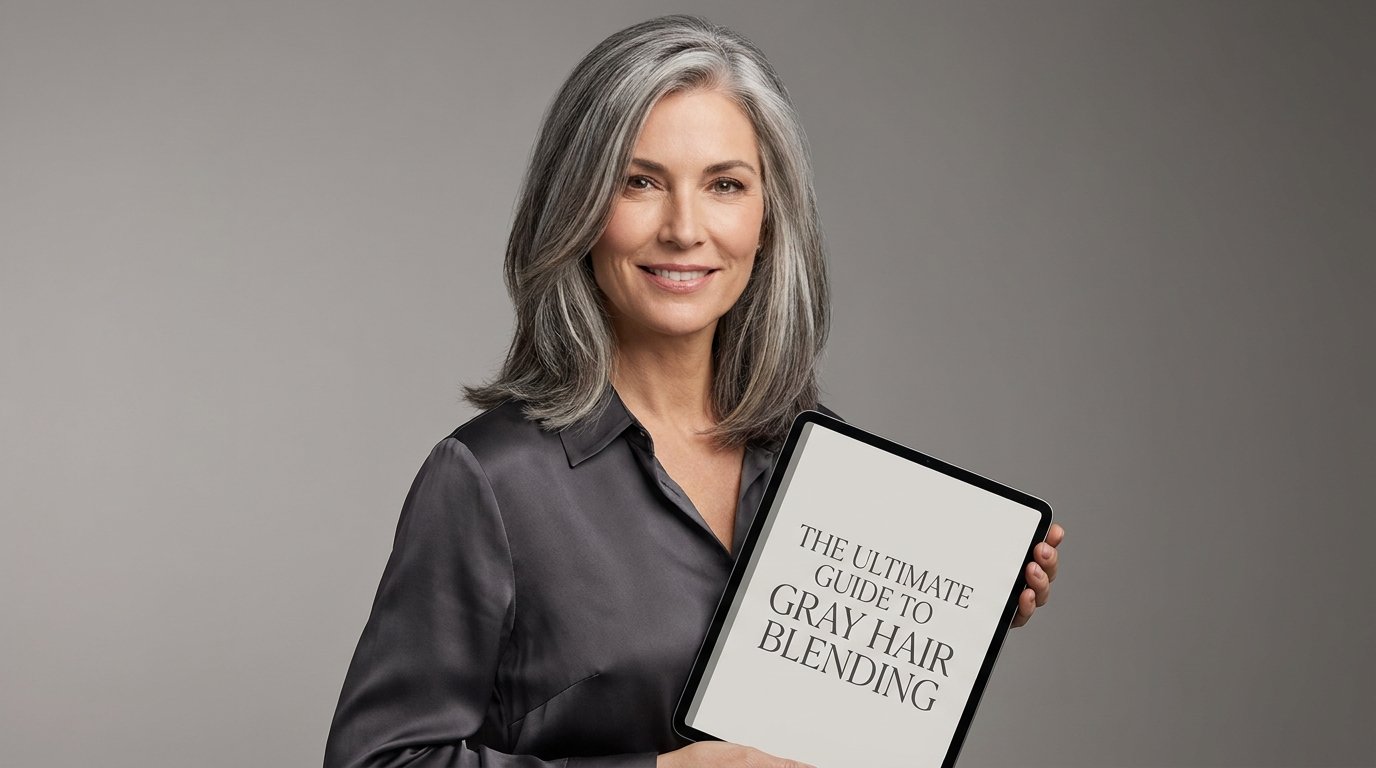

Do you remember the exact moment you spotted your first silver strand? For many of us, the immediate instinct is to pluck it or drown it in opaque, dark dye. But what if we stopped fighting nature and started working with it instead? If you are exhausted by the relentless three-week root touch-up cycle, it is time to discover the magic of gray hair blending.
This revolutionary salon technique is changing how women age, turning what used to be a point of stress into a stunning, high-fashion statement. Think of it not as giving up, but as leveling up. Today, we are going to dive deep into everything you need to know about grey blending, from seamlessly blending grey hair with dark roots to finding the perfect balayage to blend grey hair. Let’s embark on your silver transition!
What Exactly is Gray Hair Blending?
To put it simply, what is grey blending hair color? Unlike traditional coloring, which acts like a heavy blanket covering every single strand in one solid pigment, blending is more like a sheer, beautifully woven tapestry. Instead of fighting the silver, your stylist uses it as a natural highlight.
The goal of color blending for gray hair is to camouflage the gray by adding complementary tones around it. We leave some of your natural silver exposed while weaving in lowlights or highlights to diffuse the harsh line of demarcation. This means when your roots grow out, the new grays seamlessly mingle with the rest of your hair. It is the ultimate low-maintenance luxury.
The Shift: Why Women Are Embracing the Silver
Why the sudden surge in popularity? For decades, society told women to hide their age. Now, the narrative has flipped. A transition to grey hair is seen as authentic, empowering, and incredibly chic.
- Financial Freedom: You are no longer chained to the salon every three weeks.
- Healthier Hair: Less overlapping permanent dye means less chemical damage to your cuticles.
- Unique Customization: No two heads of gray hair are identical. Your blending gray hair naturally journey will yield a custom color that nobody else can perfectly replicate.
The Science Behind Color Blending for Gray Hair
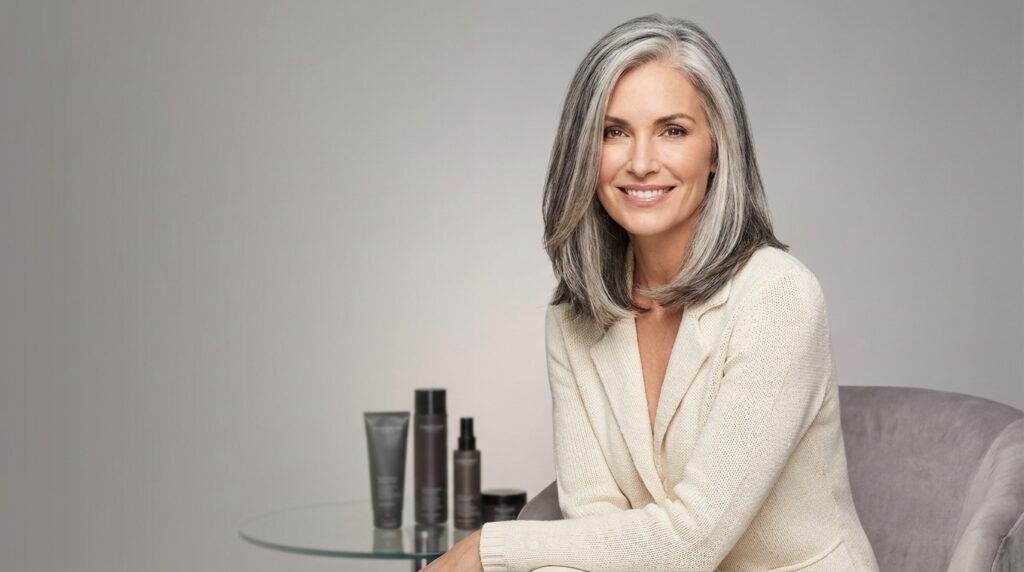
Gray hair isn’t actually gray; it is simply hair that lacks melanin (pigment). Because it lacks this pigment, the texture can often feel more wiry, stubborn, and coarse. When considering how to blend grey hair, we have to address this unique texture.
Traditional permanent dyes blast open the cuticle to deposit heavy color. However, for a softer look, many stylists prefer using a demi permanent hair color for grey blending. Demi-permanent color is like a lip gloss for your hair. It deposits a sheer wash of color without drastically altering your natural base. It naturally fades over several weeks, meaning you never get that harsh, solid line of gray regrowth. It is undeniably the best hair color to blend gray for a low-commitment transition.
Mastering the Dark Canvas: Grey Blending Dark Hair
If you are a brunette, the contrast between your dark lengths and your new frosty roots is incredibly stark. This high contrast makes the grow-out phase notoriously difficult. But do not panic; grey blending dark hair is an absolute art form, and the results are breathtaking.
When exploring how to blend gray hair with dark brown hair, the secret lies in softening the contrast. We don’t want a harsh black-and-white divide. Instead, a skilled colorist will strategically add blending grey hair with highlights and strategic lowlights. By lifting some of the dark hair to an icy or ash tone, the natural grays suddenly look like intentional, expensive highlights rather than neglected roots.
Grey Blending Balayage: The Soft Sweep
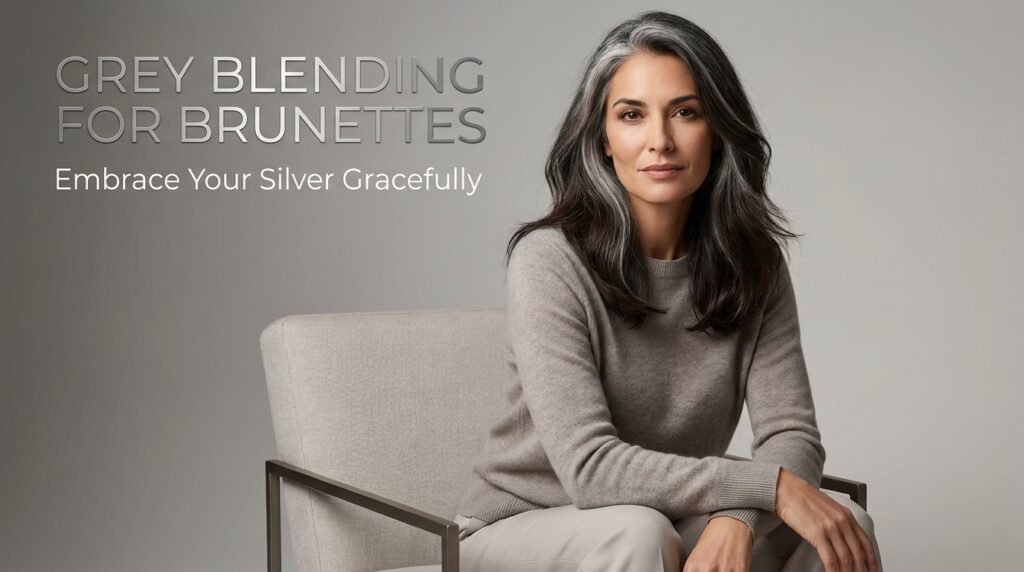
If you want the most seamless grow-out possible, you need to ask for a grey blending balayage. Balayage is a freehand painting technique. Instead of starting highlights right at the scalp in a harsh line, the colorist sweeps the lightener down the hair shaft.
When doing a balayage to blend grey hair, the stylist meticulously paints icy, cool-toned ribbons through your dark hair. This connects your silver roots to the ends of your hair, creating a beautifully melted, cohesive look. It is universally flattering and highly requested when executing grey blending for brunettes.
Tailored Techniques for Every Brunette
Not all dark hair is the same. The specific approach to your blending journey will depend entirely on your natural depth and your skin’s undertones. Let’s look at the best strategies for different brunette levels.
Grey Blending on Brown Hair: The Perfect Melt
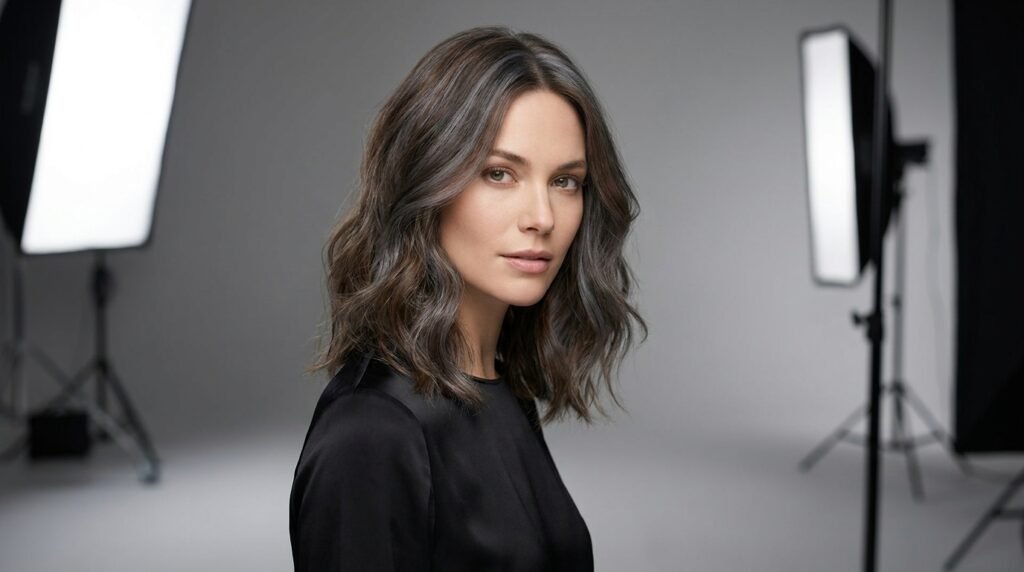
If you have medium brown or chestnut hair, gray blending brown hair usually involves weaving in cooler, mushroom-brown lowlights alongside soft, sandy-blonde highlights. The goal is to cool down your overall palette so the silver strands don’t clash with warm, brassy tones. Grey blending on brown hair is incredibly elegant and offers a very soft, romantic finish.
The Ultimate Challenge: Grey Blending on Black Hair
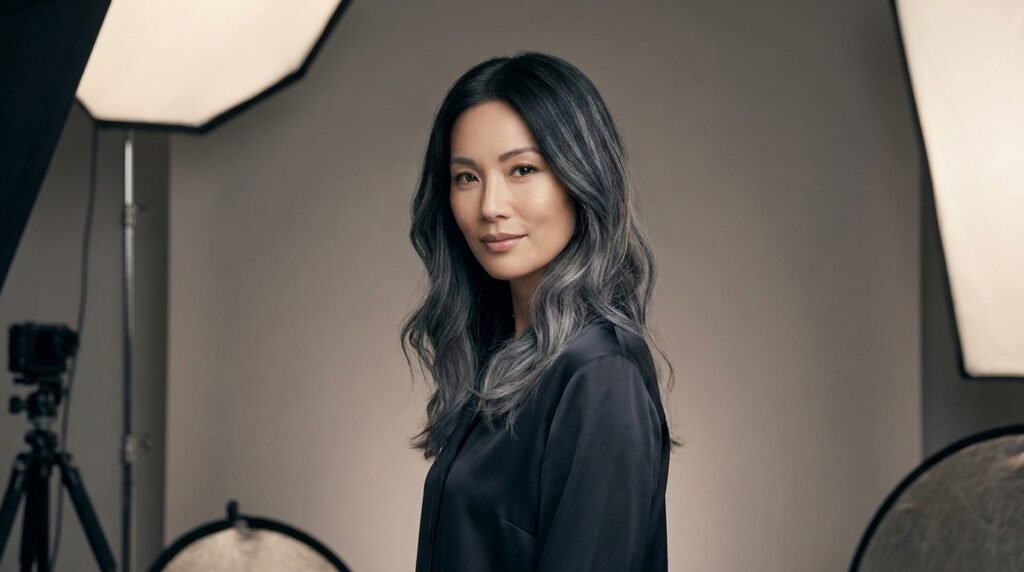
This is the highest contrast scenario. Grey blending on black hair requires a master colorist. Because you cannot easily lift black hair to white-silver in one session without severe damage, the strategy usually involves “salt and pepper” lowlights.
The stylist will use a demi-permanent dark charcoal or soft black to deepen some of the gray, while lifting a few dark strands to a cool, smoky ash. Looking at grey blending for dark hair before and after photos is crucial here; it helps you set realistic expectations for this multi-session journey.
Transitioning to Light: Blending Grey Hair to Blonde
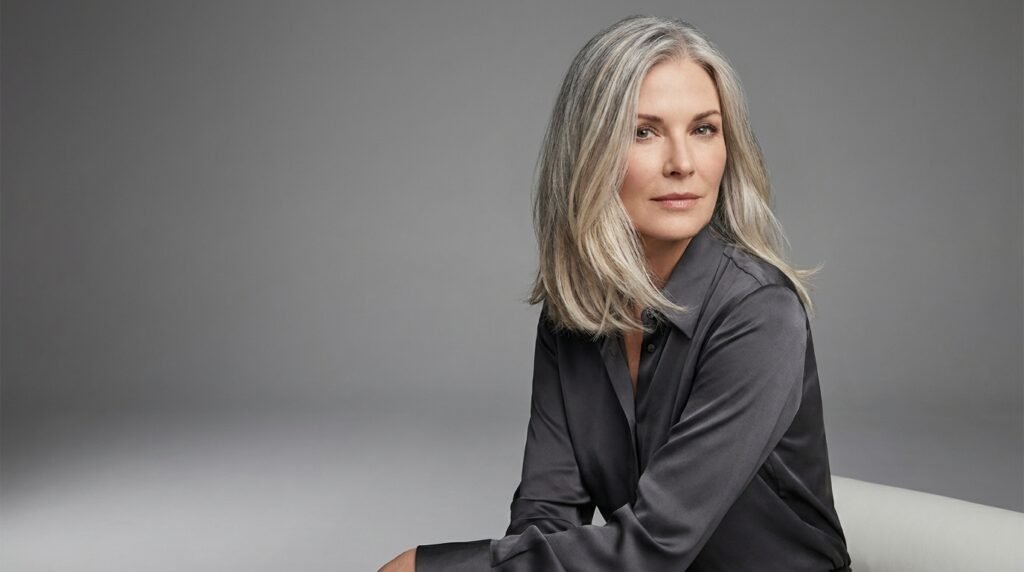
Sometimes, the best way to blend grey hair is to lean all the way into the light. If you have a high percentage of gray (over 60%), fighting to stay a dark brunette becomes a losing battle. This is when blending grey hair to blonde becomes your ultimate escape route.
By heavily highlighting the hair and toning it with icy, violet, or pearl shades, your natural white hairs simply become part of a multi-dimensional blonde look. It is a fantastic way to brighten your complexion while completely masking the gray regrowth. Your roots simply look like a purposeful “shadow root” rather than uncolored hair.
How to Maintain Your Silver Masterpiece at Home
You have achieved the perfect blend at the salon. Now, how do you keep it looking vibrant and fresh? Silver and gray tones are notoriously fragile. They can easily turn yellow from hard water, sun exposure, and heat styling tools.
- Invest in Purple Shampoo: This is non-negotiable. Purple cancels out yellow. Using a high-quality violet shampoo once a week keeps your color blending for gray hair looking icy and pristine.
- Turn Down the Heat: Gray hair is highly susceptible to heat yellowing. Always use a premium thermal protectant and turn your curling irons down to 300 degrees or less.
- Deep Condition: Because gray hair lacks melanin, it can feel wiry. Use a deeply hydrating mask packed with argan oil or keratin to keep those silver strands soft and manageable.
Taking the Leap: Finding the Right Professional
While it is tempting to look up DIY methods for blending gray hair naturally, this is one area where you truly need a professional. Color correction and silver transitioning require an advanced understanding of color theory and hair chemistry.
When searching for grey blending near me, do not just book the first salon that pops up. Look at the stylist’s Instagram or portfolio. Do they showcase healed, transitioned gray hair? Do they post grey blending for dark hair before and after content? Book a consultation first to discuss your goals, your hair history, and your budget for this journey.
Conclusion
Choosing to embrace your natural silver is a profound act of self-love and confidence. Gray hair blending is not just a hair coloring technique; it is a bridge between who you were and the stunning, authentic woman you are becoming. Whether you opt for a smoky grey blending balayage, delicate ash highlights, or a sheer demi-permanent gloss, the goal is to enhance your natural beauty, not hide it.
The transition requires a bit of patience, a masterful colorist, and a solid at-home care routine. But the reward? Absolute freedom from the harsh root line and a head of hair that shimmers with multi-dimensional, metallic grace. Embrace the silver—it looks magnificent on you.
Frequently Asked Questions (FAQs)
1. How long does the transition to gray hair take using blending techniques?
The timeline varies drastically depending on your starting color and hair length. If you have short hair, it might take 3 to 6 months. For long, previously dark-dyed hair, a full, seamless transition can take up to a year of strategic blending appointments.
2. Is demi-permanent hair color really better for gray blending?
Yes, in most cases! Demi permanent hair color for grey blending provides a translucent wash of color that fades gradually. This prevents the harsh, solid line of demarcation that permanent dyes leave behind when your roots grow out.
3. Can I achieve grey blending on black hair without bleach?
It is extremely difficult to blend high-contrast black hair and white roots without some form of lightener. A stylist will usually need to use a gentle bleach to lift some dark pieces to an ash tone to bridge the gap between black and white.
4. Will purple shampoo dry out my gray hair?
It can if overused. Purple shampoo is slightly more astringent to help open the cuticle and deposit the cool violet tones. Use it strictly once a week, and always follow it up with a deeply hydrating conditioner or hair mask.
5. What is the difference between gray blending and regular highlights?
Regular highlights aim to make you overall blonder or lighter. Gray hair blending strategically places highlights and lowlights specifically to mimic, match, and diffuse your unique, natural pattern of gray hair growth.
6. How often do I need to go to the salon for grey blending maintenance?
This is the best part! While opaque permanent dye requires touch-ups every 3 to 4 weeks, a well-executed gray blend can often last 8 to 12 weeks before needing a toner refresh or a minor balayage touch-up.
7. Does gray hair have a different texture?
Yes, when hair loses melanin, the structure changes. It often becomes more porous, slightly coarser, and more resistant to absorbing color and moisture. This is why hydrating masks and professional-grade products are essential.
8. Can I blend my gray hair at home with a box dye?
It is highly discouraged. Box dyes are formulated as permanent, opaque coverage. Attempting to create a multi-dimensional, soft blend requires isolating specific strands with foils or balayage film, which is nearly impossible to do accurately on your own head.
9. Will transitioning to gray hair wash out my skin tone?
It can if the wrong tones are used. If you have warm skin, icy silver might make you look pale. Your colorist can mitigate this by weaving in neutral or soft beige tones alongside your natural gray to keep your complexion glowing.
10. What should I ask for when looking for a stylist for this process?
When searching for grey blending near me, ask the receptionist to book you with a “color correction specialist” or someone who explicitly specializes in “gray transitions.” Ask to see their specific portfolio of silver blending work before committing.